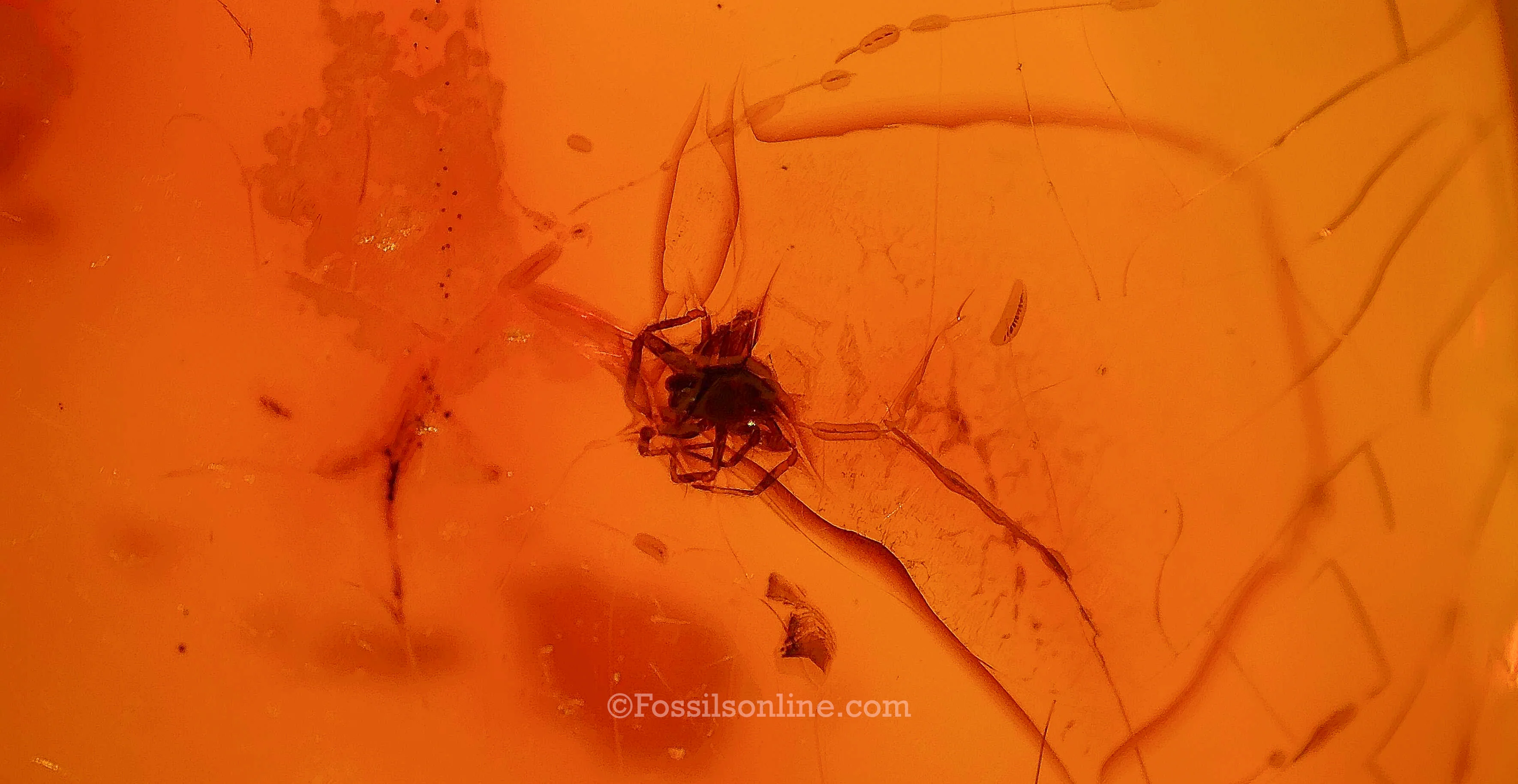
Dinosaur Age Amber with a Scuttle Fly (Phoridae) and Spider
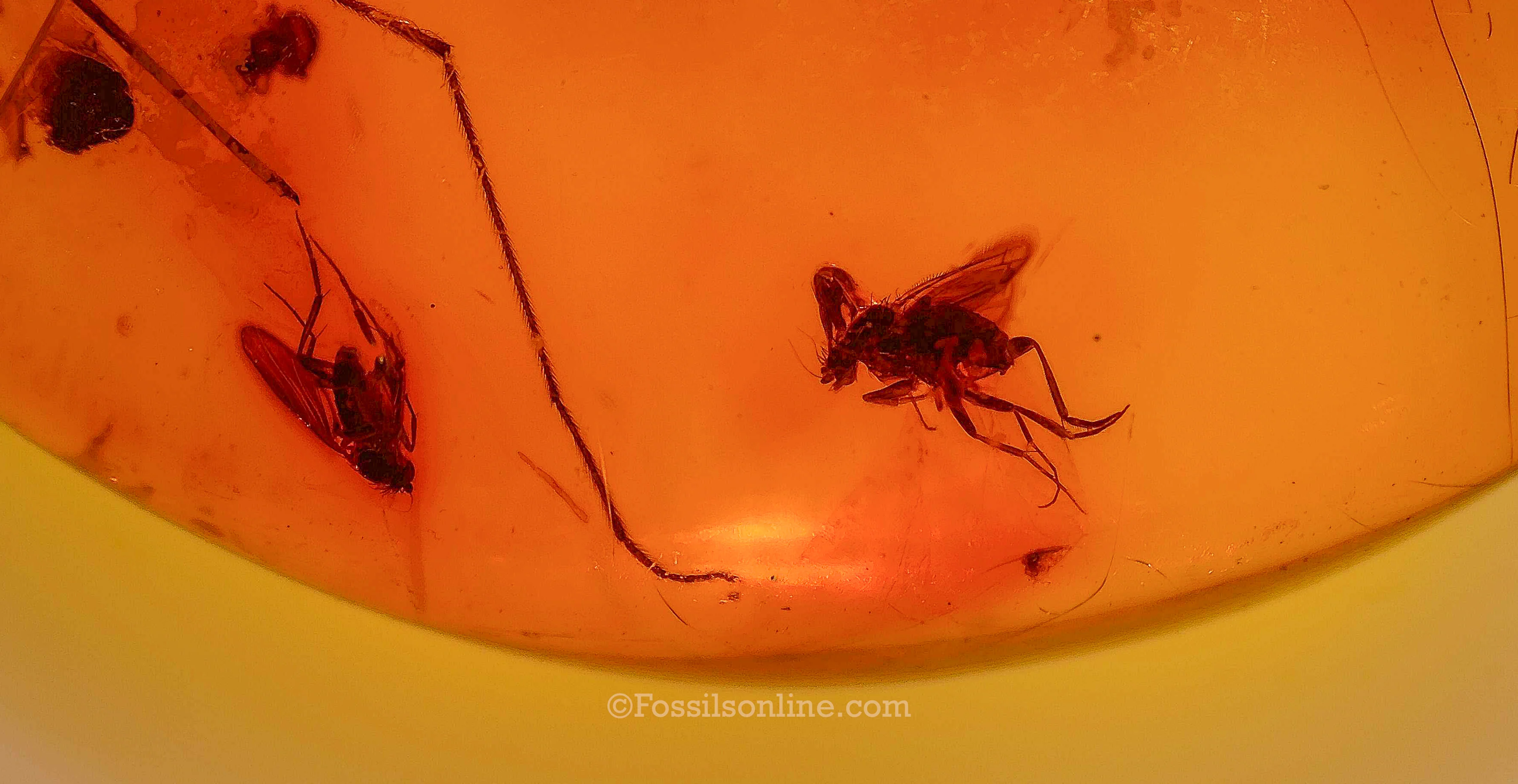
Scuttle flies of the family Phoridae are among the most frequently encountered insect inclusions in Baltic amber, yet they never lose their appeal to serious collectors. These tiny flies earned their common name from their distinctive habit of running in rapid, erratic bursts rather than taking flight when disturbed. Their abundance in Eocene forest environments made contact with flowing resin almost inevitable, and Baltic amber specimens often preserve them in exceptional detail — wings, bristles, and the characteristically humped thorax clearly visible under magnification.
Though small in size, its preservation is remarkable. The details of its body structure are still clearly visible through the golden resin, providing insight into the early evolution of flight in insects.
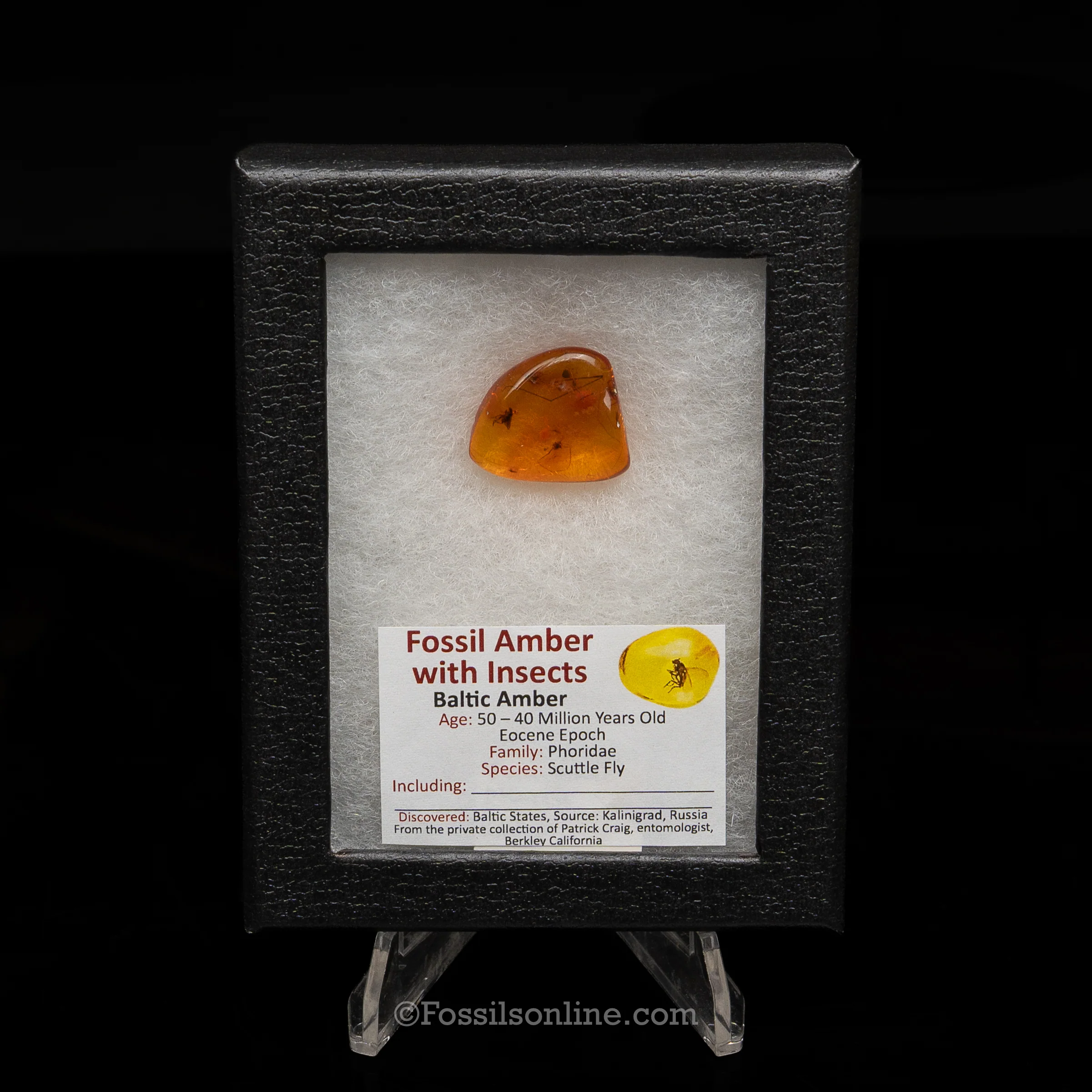
This genuine Baltic amber is between 40–50 million years old, originating from the famed deposits of Kaliningrad, Russia. Encased within the golden resin are prehistoric insects, preserved in stunning detail. From an old collection of entomologist Patrick Craig of Berkeley, California. Each specimen has been professionally photographed and enlarged to reveal the delicate features of these ancient creatures.
The process begins when the trees secrete sticky resin—often as a natural defense against injury or insect infestation. While still fresh and viscous, the resin would occasionally trap small organisms such as insects, spiders, or plant material. Once stuck, these creatures were quickly entombed, preventing decay by sealing them off from air and microorganisms.
Over time, the resin hardened and was buried under layers of sediment. Through millions of years of pressure, heat, and chemical changes, it underwent a process called polymerization, gradually transforming into amber. Because the resin preserved the entrapped organisms in fine detail, Baltic amber often contains remarkably well-preserved prehistoric life, offering scientists an invaluable window into ancient ecosystems.
Displayed in a 4.5"x3.25 case.
Original: $95.00
-65%$95.00
$33.25Product Information
Product Information
Shipping & Returns
Shipping & Returns
Description
Scuttle flies of the family Phoridae are among the most frequently encountered insect inclusions in Baltic amber, yet they never lose their appeal to serious collectors. These tiny flies earned their common name from their distinctive habit of running in rapid, erratic bursts rather than taking flight when disturbed. Their abundance in Eocene forest environments made contact with flowing resin almost inevitable, and Baltic amber specimens often preserve them in exceptional detail — wings, bristles, and the characteristically humped thorax clearly visible under magnification.
Though small in size, its preservation is remarkable. The details of its body structure are still clearly visible through the golden resin, providing insight into the early evolution of flight in insects.
This genuine Baltic amber is between 40–50 million years old, originating from the famed deposits of Kaliningrad, Russia. Encased within the golden resin are prehistoric insects, preserved in stunning detail. From an old collection of entomologist Patrick Craig of Berkeley, California. Each specimen has been professionally photographed and enlarged to reveal the delicate features of these ancient creatures.
The process begins when the trees secrete sticky resin—often as a natural defense against injury or insect infestation. While still fresh and viscous, the resin would occasionally trap small organisms such as insects, spiders, or plant material. Once stuck, these creatures were quickly entombed, preventing decay by sealing them off from air and microorganisms.
Over time, the resin hardened and was buried under layers of sediment. Through millions of years of pressure, heat, and chemical changes, it underwent a process called polymerization, gradually transforming into amber. Because the resin preserved the entrapped organisms in fine detail, Baltic amber often contains remarkably well-preserved prehistoric life, offering scientists an invaluable window into ancient ecosystems.
Displayed in a 4.5"x3.25 case.